
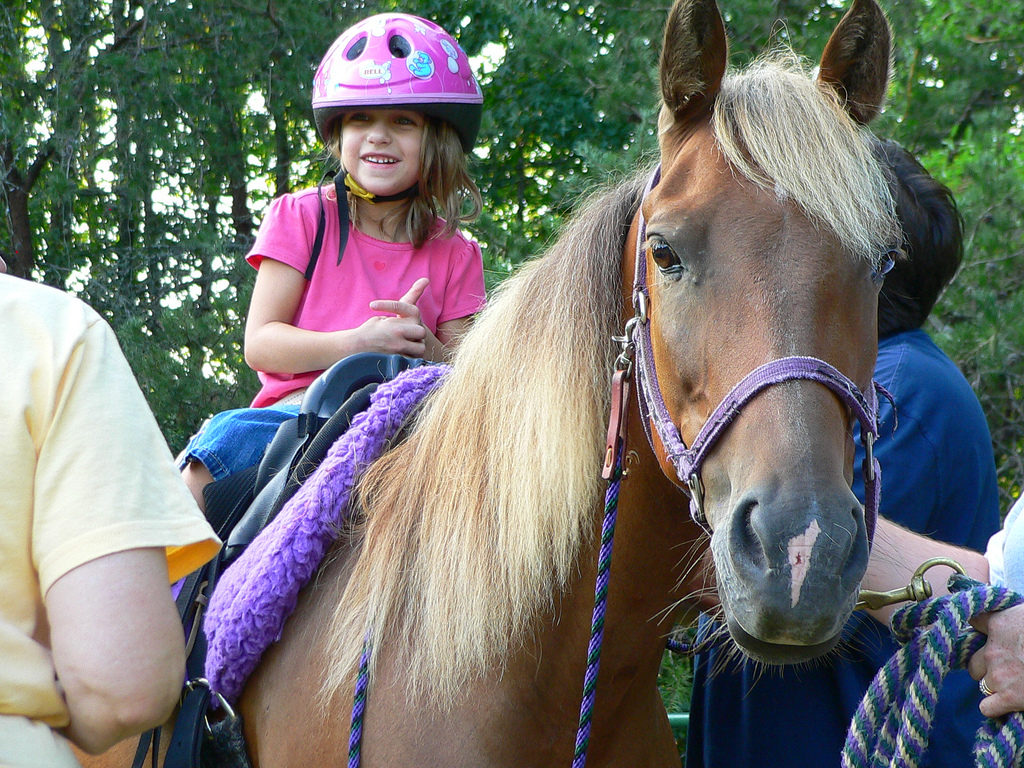
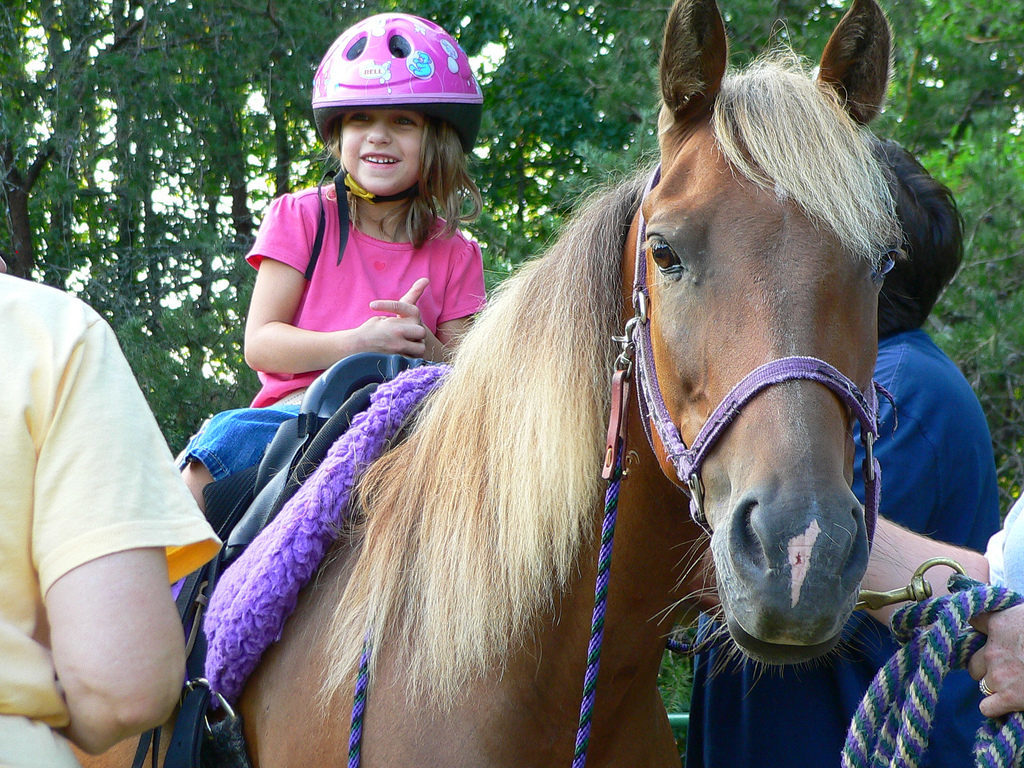
When many people think of the word “therapy” they immediately think of sessions with psychologists or post-injury appointments that may happen with a trainer. While these conclusions would not be wrong, they fail to encompass the wide range of enriching activities that provide physical and emotional support. You may or may not be surprised to learn that equestrianism can serve as a tool to improving the fitness of people with physical disabilities. Though the various reaped rewards can be nuanced and emotionally-charged, we have chosen to highlight some of the more common therapeutic benefits of horseback riding.
Advances in balance and coordination: Having to sit up straight while also maintaining correct foot and leg position, controlling the reins, and posting up and down is not an easy job. It takes a lot of balance and coordination to do all those movements simultaneously and properly.
Core strength improvements: The mere act of sitting on a walking horse forces the rider’s core muscles to engage in order to stay upright and balanced. After all, a horse’s walk is a three-dimensional movement that moves not only forward, but also side-to-side, and is much different from a humans pace. It also engages the rider’s pelvic muscles, and provides a range of different movements based on the animal’s specific gate.
Increases motor skills (both fine and gross): Fine motor skills (also called “dexterity”) refers to the use of small muscles such as fingers and hands. Relatedly, gross motor skills are the use of larger muscle groups such as legs and back. Riding a horse can improve fine motor skills via the use of the reins and having to fasten straps on equipment such as helmets and stirrups. Gross motor skills can improve in the acts of mounting and dismounting off a horse, as well as posting, and 2-point position.
Social and communication skills: Conversing with people in the atmosphere of a barn is a unique experience that can improve communication and social skills. For those who take horseback riding lessons as a form of therapy, they are constantly interacting with people; whether it’s the riding instructor giving them directions or (depending on the severity of the disability) the volunteers who are there to assist them in the ride and make sure they are safe and comfortable. Riders also must give verbal commands to the horse, so if they want a horse to move forward, they will have incentive to communicate those instructions.
Sensory integration: For those on the Autism spectrum who are doing therapy horseback riding, sensory overload is a common issue. Riding a horse can help them to focus on the immediate task rather than all of their senses coming in at once time. Equestrianism also a great way to slowly introduce individuals to different sounds, smells, sights, and textures that they may not have been exposed to before.
Increased confidence: Everyone can benefit from improved belief in oneself, including those individuals with physical disabilities. The experience of trying something new, potentially facing a fear, and improving over time can strengthen confidence.
***
Both adults and children with disabilities can find a range of physical and mental benefits from therapeutic horseback riding. If you know someone with a disability and want to find more information on this form of therapy, you can check out the Professional Association of Therapeutic Horsemanship (PATH) International for registered places to ride, and more details regarding specific details.