
Reducing flies and our chemical dependency
Ah, spring… the sun is shining, birds are chirping, the grass is getting green, and the skies are blue. You gaze at your horse, happily grazing in the field, when there’s suddenly a low murmur, growing in intensity until the full on buzz of insects fills your ears with their annoying warning. They take aim at your horse, sending him kicking, swishing, bucking and running. Your eyes once again become accustomed to the ‘gnat burn’ and picking the mushed dead things out of the corner before you go to bed, once again, becomes second nature. Yes, my friend’s, it is bug season.
The list of products to ward off flies is extensive… and most of which contain loads of chemicals that play into flies keen sense of smell. Most of these products are short acting, and, let’s be honest, probably make us feel better for doing something rather than providing the horse actual relief.
In order to implement using less chemicals and provide our horse more relief, we can look at stable management, and horse care alternatives to reduce the general fly population and protect horses and humans who are exposed.
Stopping them before they start
Since flies basic purpose of being here is assisting in decomposing organic matter, we need to look at how we manage the large amounts of ‘organic matter’ that horse’s produce. For all those who have Pony Club or 4-H experience, these practices probably look familiar.
- Keep manure piles away from barn, and managed with fly control bugs (to manage the flies before they ever take flight!). If possible, have it removed entirely (every week, since the fly breeding cycle is about 8 days), but if not, just make sure it’s located far far away.
- Drag fields and or spread manure thinly, to break apart the flies’ breeding ground.
- Remove stagnant water sources (old tires, undrained puddles, unused water troughs)
- Use general sanitation practices – garbage cans with tight fitting lids, tightly sealed and dry feed storage, etc…
The strong ones that survived
Even with careful management, there are going to be some flies who survive until adulthood. These pesky buggers, while seemly live to annoy you and your horse, are still creatures of habit and can be controlled using the science behind their behavior.
- Fly Traps – Traps are beneficial in reducing the adult population, but first your must identify the type of fly, and the most effective location for the appropriate trap. https://www.horseloverz.com/search/main/fly%20traps/
- Weed and grass control – We all like our barns to looks pretty, but controlling the tall grass and weeds around the barn means we also remove the area that flies would normally hang out and cool off, encouraging them to find new hangouts.
- Odor control – Flies are attracted to things by their sense of smell. By using natural products to control manure and ammonia aroma, like Espoma Sani-Care Odor Control (https://www.horseloverz.com/horse-barn-stable-supplies-equipment/horse-barn-stable-supplies/disinfectant-deoderizers/espoma-sani-care-odor-control), you’ll be encouraging flies out of your aisle.
- Grooming – Just like the barn aisle, you don’t want your horse’s stench to attract unwelcome guests. By removing manure and urine spots, and treating wounds and sores, you will be helping your horse to unfriend these pests.
- Natural Sprays that halt flies – Companies are getting smart, and realizing that people may not want to coat their horses (and themselves) in chemicals, so there is now loads of natural sprays on the market. One of our favorites is Natures Defense by Farnam (https://www.horseloverz.com/fly-insect-control/fly-spray/farnam-natures-defense-fly-repellent-spray-rtu-with-sprayer). Thanks to the internet, there are also TONS of DIY recipes if you’re in the mood to whip up your own supply.
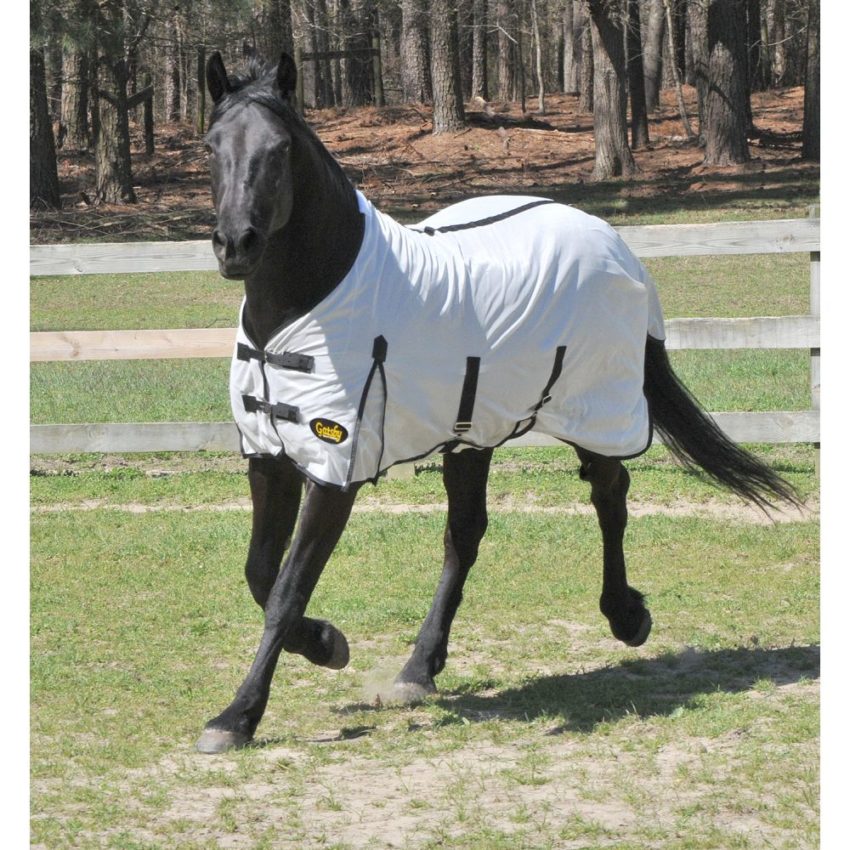
- Physical Armor – One of the most effective ways to keep your horse away from biting flies, is to put a physical barrier between them and the insect. There are loads of fly sheets available, so getting one that provides protection from flies and UV rays, comfortable fit with no-rub should protection and movement gussets, and a belly wrap is paramount (like the Gatsby Softmesh Standard Fly Sheet –https://www.horseloverz.com/fly-insect-control/fly-spray/farnam-natures-defense-fly-repellent-spray-rtu-with-sprayer). The selection of fly masks is just as plentiful, and considering horses make it a sport to lose these in the field, finding one that fits snuggly, comfortably while protecting the horse’s eyes and ears is important (the Kodiak Bug Eye Saver with Ears – https://www.horseloverz.com/fly-insect-control/fly-masks-veils/kodiak-stretch-bug-eye-saver-with-ears – is an excellent example).
Good luck, and happy, bug-free riding!